
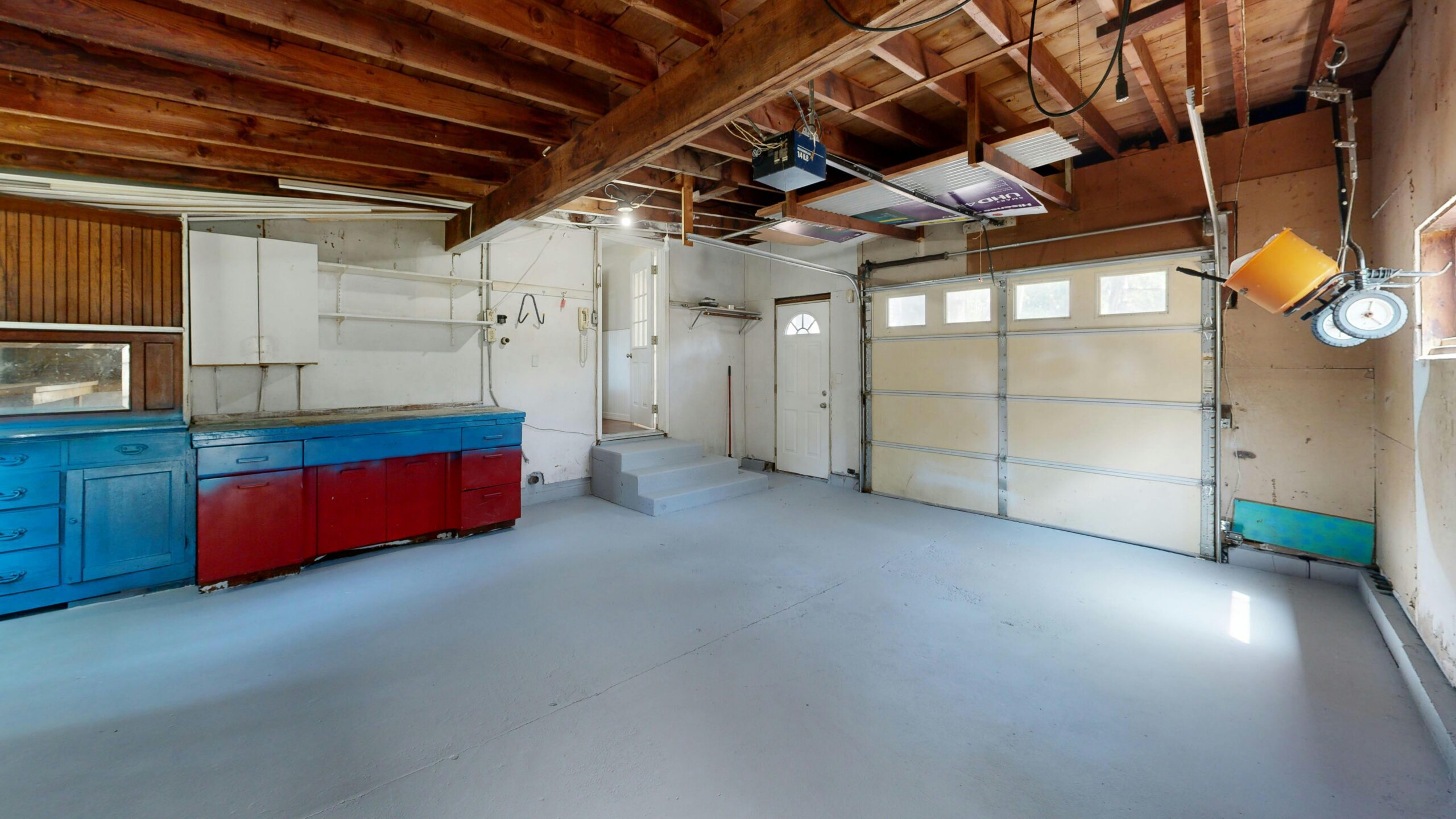
Putting Epoxy on a Garage Floor: What You Need to Know First
Putting epoxy on a garage floor is a proven way to seal and protect concrete — but the floor has to be ready first. Epoxy bonds to properly prepared concrete. It does not bond to dust, contamination, moisture, or a surface that has not been mechanically ground. Get the prep right and the coating lasts 10 to 20 years. Skip it and it peels.
Can You Put Epoxy on Any Garage Floor?
Most garage floors can have epoxy applied — but not without assessment. The concrete must be structurally sound, free of active moisture intrusion, and clear of previous coatings or sealers that would block adhesion.
Concrete age matters. New concrete must cure for at least 28 days before epoxy can be applied. Freshly poured slabs contain residual moisture that prevents the coating from bonding correctly. Applying epoxy too early guarantees failure.
Moisture is the biggest risk in Florida. A garage floor slab sitting on ground that retains moisture will push vapour through the concrete from below. This process — called hydrostatic pressure — lifts coatings off the slab over time. A professional installer tests for moisture vapour transmission rate before specifying the coating system. If moisture is present, a moisture-mitigation primer goes down first. Without that step, any coating — regardless of quality — will eventually fail.
Painted floors require full removal before epoxy goes down. Paint and sealers sit on top of the concrete. Epoxy needs to penetrate the surface profile — it cannot do that through a painted layer.
What Preparation Does a Garage Floor Need Before Epoxy?
Surface preparation is the most important part of putting epoxy on a garage floor. It is not optional and it cannot be replaced with a stronger primer or a thicker coating.
The standard professional preparation process covers four stages. First: degreasing. Any oil, fuel, or chemical contamination must be removed with an industrial degreaser before any mechanical work begins. Second: diamond grinding. A commercial grinder opens the concrete surface profile, removing any existing sealers, paint, or laitance — the weak top layer of concrete that forms during curing. Diamond grinding creates the micro-texture the epoxy needs to bond.
Third: crack and damage repair. Surface cracks are filled with polyurea or epoxy crack filler. Spalls and chips are patched. Fourth: moisture testing. A calcium chloride test or relative humidity probe measures the vapour transmission rate. If it exceeds the coating manufacturer’s threshold, a moisture barrier coat goes down before the main system.
Acid etching is sometimes used as an alternative to diamond grinding. It opens the surface chemically rather than mechanically. Professional installers generally do not rely on acid etching alone — it produces inconsistent surface profiles and does not remove contamination as thoroughly as diamond grinding.
Prep is where most garage floor projects succeed or fail. At Clever Coatings, we assess your slab — moisture, cracks, contamination, and surface profile — before we specify anything. Visit our Residential Services page to see what a professional installation covers, or get a free quote and we will come take a look — call us on (407) 489-5256.
What Types of Epoxy Are Used on Garage Floors?
Not all epoxy products are the same. The type of epoxy used on a garage floor determines the performance, thickness, and longevity of the finished coating.
100% solids epoxy is the professional standard for garage floors. It contains no water or solvents — the entire volume of the product cures into the finished coating. This produces a thick, dense film that resists impact, chemical spills, and Florida’s thermal cycling. Water-based epoxy — the type found in most consumer kits — contains water as a carrier. When the water evaporates, the film is significantly thinner and less durable.
Most professional garage floor systems are multi-layer. The primer coat penetrates the concrete and creates the bonding foundation. The body coat builds colour and film thickness — this is where decorative options like colour chips or quartz aggregate are broadcast. The topcoat seals everything and determines the surface sheen and chemical resistance. In Florida, a polyaspartic or polyurethane topcoat is typically specified over the epoxy body coat because polyaspartic is UV-stable — it will not yellow or chalk in direct sunlight the way standard epoxy can.
For a direct comparison of epoxy versus polyaspartic systems on garage floors, see our guide on epoxy vs polyaspartic — which garage floor lasts longer.
How Long Does It Take to Apply Epoxy on a Garage Floor?
A professional epoxy application on a garage floor takes one to two days on site. The timeline depends on floor size, floor condition, the number of coating layers, and the system specified.
Day one is always surface preparation. Grinding, degreasing, crack repair, and moisture testing are completed before any coating goes down. For a standard two-car garage, this takes four to six hours. Day two is coating application. Each layer must be applied within the previous coat’s recoat window — too early or too late compromises intercoat adhesion. A three-coat system — primer, body coat, topcoat — is typically complete within one full day.
Curing is a separate timeline from application. The floor is ready for foot traffic in 24 hours and vehicle use in 72 hours. Full chemical cure — when the coating achieves maximum hardness and chemical resistance — takes approximately seven days. During that period, avoid dragging heavy objects, parking vehicles with sharp edges, or exposing the surface to fuel or chemicals.
For a fuller look at what the upgrade involves from start to finish, see our guide on the epoxy floor coating as the best garage upgrade of 2026.
What Can Go Wrong When Applying Epoxy on a Garage Floor?
Epoxy on a garage floor fails for predictable reasons. Almost every failure traces back to one of three root causes: inadequate surface prep, incorrect product selection, or application in the wrong conditions.
Peeling and delamination happen when the concrete was not properly prepared. Oil contamination, a laitance layer left on the surface, or insufficient grinding all prevent true adhesion. The epoxy looks good initially — it fails months later when thermal cycling or moisture pressure gets beneath it.
Bubbling and pinholes happen when the epoxy is applied over concrete that is off-gassing — releasing air or moisture vapour through the surface. This is a preparation error. It is also why applying epoxy in the heat of a Florida afternoon is problematic — the slab warms rapidly, pushing air out as the coating is going down. Professional installers apply coatings in controlled conditions, typically morning applications when the slab is coolest.
Yellowing happens when a standard epoxy topcoat is used in a space exposed to sunlight. Epoxy is not UV-stable. Florida garages with windows or open doors see significant UV exposure. A polyaspartic topcoat is the correct specification for any Florida garage floor that sees sunlight. This is a product selection decision — not something that can be corrected after the fact.
Frequently Asked Questions About Epoxy on a Garage Floor
Can you put epoxy on a garage floor yourself?
You can apply a DIY epoxy kit on a garage floor, but results vary significantly. Consumer kits use thin, water-based formulas that are not the same as professional two-part systems. Without commercial diamond grinding, adhesion is limited. Most DIY applications in Florida’s climate start peeling within two to three years.
How long does epoxy on a garage floor take to dry?
Epoxy applied on a garage floor is ready for foot traffic within 24 hours of the final coat. Full vehicle use typically takes 72 hours. Full chemical cure — when the coating reaches maximum hardness — takes approximately seven days. Florida’s warmth speeds surface dry time but does not accelerate the full cure.
Does the garage floor need to be clean before epoxy is applied?
Yes — a garage floor must be completely clean, dry, and free of oil, grease, paint, adhesive residue, and previous coatings before epoxy is applied. Contamination prevents adhesion. Professional installers use degreasers, mechanical grinding, and moisture testing before any coating goes down.
Can epoxy be applied on a garage floor with cracks?
Minor cracks can be filled and repaired before epoxy is applied on a garage floor. Surface cracks and shrinkage cracks are handled as part of the standard prep process. Structural cracks — those caused by movement or settling — require assessment and remediation before any coating is applied.
How much epoxy do you need for a garage floor?
A standard two-car garage floor of approximately 400 to 500 square feet requires roughly 1.5 to 2 gallons of epoxy per coat for a body coat layer. Most professional systems apply two to three coats — primer, body coat, and clear topcoat — with precise coverage calculated based on concrete porosity.
Ready to Get Epoxy on Your Garage Floor?
The difference between an epoxy floor that lasts 15 years and one that peels in 18 months is preparation and product selection. At Clever Coatings, we assess your slab before we touch it. Our Residential Services cover the full installation — moisture testing, diamond grinding, crack repair, and a Florida-rated coating system from primer to topcoat. Get a free quote and we will come assess your floor — no pressure, no jargon. Call us on (407) 489-5256.