Introduction
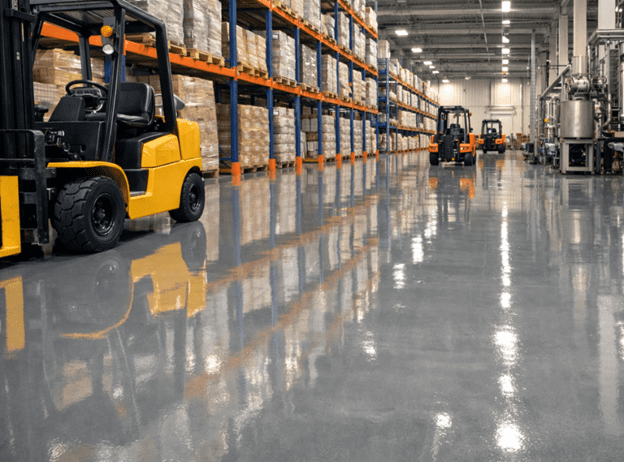
Walk into a busy warehouse or manufacturing facility and you will see the same challenges everywhere: heavy forklifts, constant foot traffic, oil spills, and equipment rolling across the floor all day. Standard concrete simply is not designed to handle that kind of punishment long term.
That is where industrial epoxy flooring comes in. A professionally installed coating system transforms porous concrete into a durable, seamless surface built for high-demand environments. It protects the slab underneath, improves safety, and makes daily maintenance far easier.
At Clever Coatings USA, we have installed coating systems across Central Florida for spaces ranging from residential garages and patios to restaurants, retail spaces, and large industrial facilities. In high-traffic environments like warehouses and manufacturing plants, epoxy systems provide a level of durability that raw concrete just cannot match.
In this guide, we will break down how these systems work, how they are installed, and what Florida property owners should know before choosing epoxy for a commercial or industrial space.
What Makes Industrial Epoxy Flooring Different from Residential Systems?
Industrial environments require flooring systems designed for much higher stress than residential coatings. While both use similar chemistry, industrial-grade coatings are thicker, stronger, and built to handle constant mechanical wear.
Industrial epoxy flooring differs from residential coatings primarily in thickness, durability, and chemical resistance. Industrial systems are typically built with multiple layers and heavy-build materials designed to withstand forklifts, pallet jacks, oil exposure, and continuous traffic in warehouses and manufacturing facilities.
Built for Heavy Equipment and Traffic
Most residential garage coatings are applied at thinner film builds. Industrial systems are much more robust.
A typical system in a warehouse might include:
- Mechanical concrete grinding or shot blasting
- Crack and joint repair
- High-build epoxy base coat
- Optional broadcast aggregate for slip resistance
- Protective topcoat
This layered structure creates a surface capable of withstanding constant impact and abrasion.
Why Professional Installation Matters
This is where experienced industrial epoxy flooring contractors make a major difference. Proper surface preparation determines whether the system performs for years or begins peeling within months.
In Florida, humidity adds another layer of complexity. Concrete slabs often contain trapped moisture, especially in older buildings or facilities near the coast. Experienced industrial epoxy flooring contractors test for moisture vapor transmission before installing coatings.
Skipping this step is one of the most common causes of coating failure.
Epoxy vs Other Epoxy Concrete Floor Coverings
There are many types of epoxy concrete floor coverings available, but industrial systems are typically formulated with higher solid content and thicker build layers. That extra material provides greater protection against wear, chemicals, and impact.
How Thick Should Industrial Epoxy Flooring Be?
Thickness is one of the most frequent questions facility owners ask. The answer depends on how the space is used.
Industrial epoxy flooring systems in warehouses typically range from 20 to 60 mils in total thickness depending on traffic levels. Heavy forklift operations or manufacturing equipment often require thicker systems with multiple epoxy layers and aggregate reinforcement for durability.
Choosing the Right System for the Environment
Different industrial operations place different demands on flooring.
For example:
- Light warehouses: 20–30 mil systems
- Distribution centers: 30–40 mil systems
- Manufacturing facilities: 40–60 mil systems or more
Facilities that handle chemicals or solvents may also require specialized formulations.
Professional commercial epoxy flooring installation ensures the system is tailored to the environment rather than applying a generic coating.
Surface Preparation Is Everything
We have seen many floors fail because preparation was rushed. Proper installation requires:
- Diamond grinding the concrete
- Repairing cracks and control joints
- Removing oils or contaminants
- Ensuring correct surface profile
Experienced industrial epoxy flooring contractors know that prep work can take as long as the coating itself.
It is not a glamorous part of the job—but it is the most important thing.
Why Businesses Choose Epoxy Floor Coating Commercial Systems
Industrial and commercial property owners often choose epoxy because it improves both durability and efficiency inside the facility.
Stronger Protection for Concrete
Concrete is porous and absorbs oils, chemicals, and moisture. Over time, that leads to cracking, spalling, and surface deterioration.
An epoxy floor coating commercial system creates a protective barrier that prevents those contaminants from penetrating the slab.
In busy facilities, that protection dramatically extends the life of the concrete underneath.
Safer Work Environments
Slip resistance can be customized depending on the space.
Many epoxy concrete floor coverings include broadcast aggregates that improve traction while still allowing easy cleaning. That is especially important in areas where water, oils, or manufacturing fluids may spill.
Easier Cleaning and Maintenance
Raw concrete traps dust and debris. Epoxy-coated floors are non-porous and seamless, which makes them far easier to maintain.
For many businesses, this is one of the biggest advantages of epoxy floor coating commercial systems.
Daily cleaning typically involves:
- Dust mopping
- Occasional wet mopping
- Periodic machine scrubbing
There is no need for waxing or polishing like traditional floor finishes.
What Is the Lifespan of Industrial Epoxy Floors in Warehouses?
So how long do these floors last?
The answer depends on usage, maintenance, and installation quality.
In warehouse environments, industrial epoxy floors typically last 10–20 years when professionally installed and maintained. High-traffic facilities may require periodic topcoat refreshes, but the underlying epoxy system can remain intact for decades when applied correctly over properly prepared concrete.
Factors That Affect Longevity
Several factors influence the lifespan of epoxy concrete floor coverings:
- Surface preparation quality
- Thickness of the epoxy system
- Traffic intensity
- Chemical exposure
- Maintenance practices
Facilities with extremely heavy forklift traffic may eventually require recoating in specific lanes.
Florida Climate Considerations
Here is a question we hear a lot: “Does Florida humidity affect epoxy floors?”
Yes—mostly during installation.
High humidity can slow cure times and increase the risk of moisture vapor issues in concrete slabs. Professional commercial epoxy flooring installation includes moisture testing and climate monitoring to ensure proper curing.
Once cured, epoxy systems perform well in Florida’s climate.
Choosing the Right Industrial Epoxy Flooring Contractors
Not all coating installers specialize in industrial environments. Large facilities require planning, scheduling, and the right equipment.
When evaluating industrial epoxy flooring contractors, look for teams that:
- Use industrial-grade grinders or shot blasters
- Perform moisture testing
- Provide clear system specifications
- Offer multiple epoxy floor coating commercial options
- Have experience with large commercial spaces
At Clever Coatings USA, we install coatings for a wide range of spaces across Central Florida—not just warehouses. Our team works on garages, patios, driveways, home interiors, gyms, laundry rooms, basements, restaurants, retail spaces, and large commercial facilities.
Each environment requires a different coating system.
The goal is always the same: protect the concrete and deliver a floor that performs reliably for years.
Conclusion
Industrial environments demand flooring that can withstand constant pressure, heavy equipment, and chemical exposure. Industrial epoxy flooring provides a durable, seamless solution that protects concrete, improves safety, and simplifies maintenance in warehouses and manufacturing facilities.
When installed correctly by experienced industrial epoxy flooring contractors, these systems can last decades with minimal upkeep. From high-build coatings to specialized epoxy concrete floor coverings, the right system depends on the specific needs of your facility.
At Clever Coatings USA, we install professional commercial epoxy flooring installation systems throughout Orlando and Central Florida for everything from industrial warehouses to retail spaces and residential properties.
Want a warehouse floor built to handle forklifts, heavy traffic, and daily wear?
Request a free estimate and our team will walk you through the best coating options for your facility.
Book a Free Consultation / Get a Free Estimate
FAQ
How much does commercial epoxy flooring installation cost for a warehouse?
Pricing varies depending on floor condition, square footage, and system thickness. Most commercial epoxy flooring installation projects require surface preparation, crack repair, and multiple coating layers. Larger warehouses often benefit from economies of scale, but heavy-duty systems with thicker builds can increase material costs.
Are epoxy concrete floor coverings good for manufacturing facilities?
Yes. Epoxy concrete floor coverings are commonly used in manufacturing because they resist chemicals, abrasion, and heavy equipment traffic. They also create seamless surfaces that are easier to clean and maintain than bare concrete, which helps maintain safer and more efficient work environments.
How long does epoxy floor coating commercial installation take?
Most epoxy floor coating commercial projects take two to four days depending on size and system complexity. Preparation usually takes the longest. Florida humidity can slightly extend cure times, but experienced installers schedule work carefully to minimize downtime for businesses.
Can industrial epoxy flooring handle forklifts?
Yes. When installed properly, industrial epoxy flooring is designed to withstand forklift traffic, pallet jacks, and heavy equipment. Thicker systems with reinforced layers are typically recommended for distribution centers and warehouses where constant vehicle traffic occurs.
How do I choose reliable industrial epoxy flooring contractors? Look for industrial epoxy flooring contractors with experience in commercial environments, proper surface preparation equipment, and moisture testing capabilities. Reputable contractors should clearly explain the system being installed and recommend coatings based on the specific demands of your facility.