How to Clean Epoxy Floor: The Right Way to Maintain Your Coating
To clean an epoxy floor, sweep or vacuum the surface, then mop with warm water and a pH-neutral cleaner using a soft microfibre mop. Avoid acidic cleaners, citrus solvents, and abrasive scrubbers — these strip the gloss layer and shorten the life of the coating. Most epoxy floors only need a proper clean once a week.
How do you clean an epoxy floor properly?
Cleaning an epoxy floor properly takes three steps: dry sweep, damp mop, and spot treat. Start by removing loose grit with a soft broom or a vacuum on the hard-floor setting. Grit is the biggest enemy of an epoxy gloss layer — dragging it around with a wet mop scratches the surface.
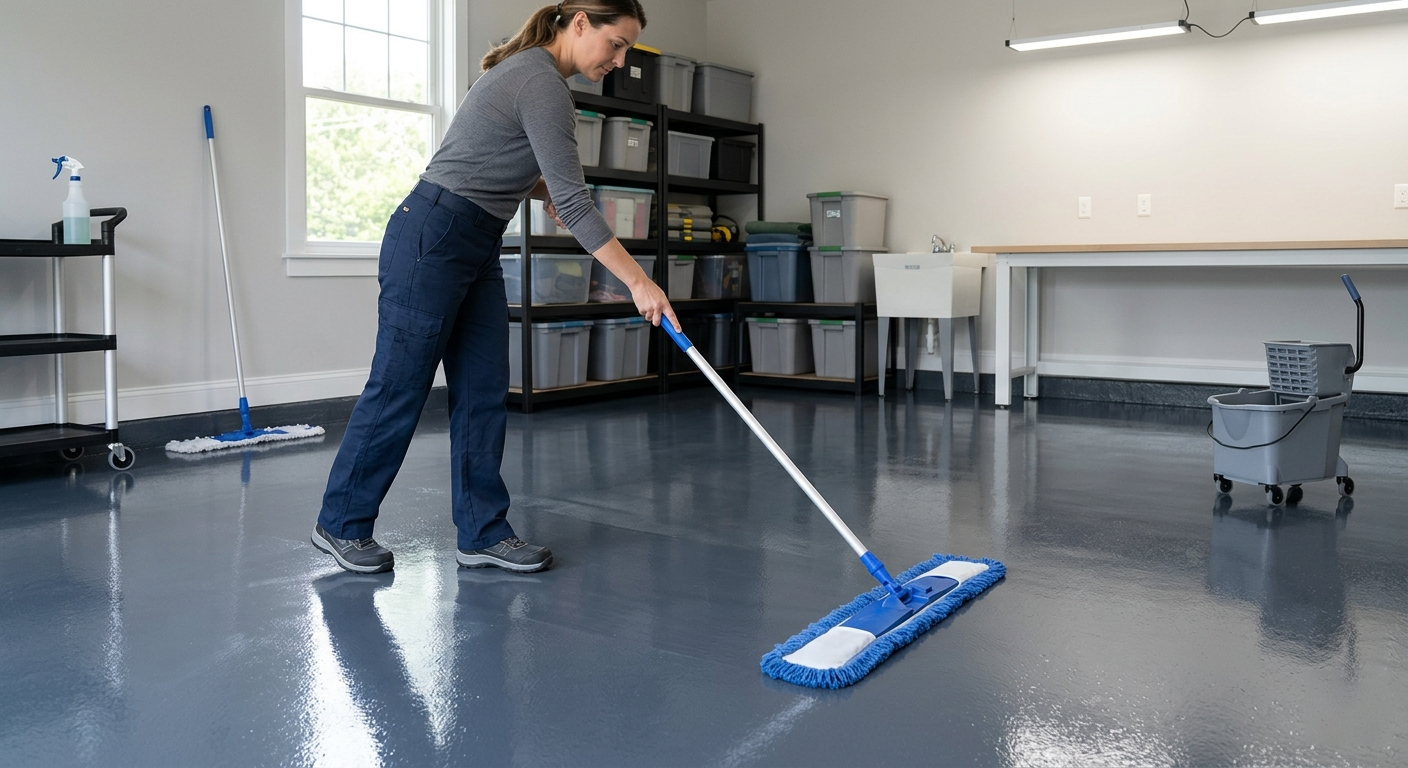
Next, mop with warm water and a pH-neutral cleaner. A few capfuls of mild dish soap in a bucket of warm water works well for residential floors. Use a soft microfibre flat mop, not a string mop or scrubbing pad.
Finally, spot treat any oil, grease, or tyre marks before they set. A 30-second wipe with the right cleaner takes care of marks that would otherwise turn into permanent stains. The full routine takes about ten minutes for a two-car garage.
What is the best cleaner for epoxy floors?
The best cleaner for epoxy floors is warm water with a pH-neutral cleaner — either a few capfuls of mild dish soap or a dedicated commercial epoxy cleaner. Both lift dirt without attacking the resin or the top coat.
Simple Green All-Purpose Cleaner (diluted), Bona Hard-Surface Floor Cleaner, and Pine-Sol Original (heavily diluted) are all safe for epoxy. So is plain ammonia at a 1:8 ratio with water for tougher jobs. Whatever you choose, check the label for two words: pH-neutral.
For commercial floors taking heavy traffic, an auto-scrubber with a soft pad and neutral cleaner gets the job done in a fraction of the time. The principle is the same as residential — just scaled up.
How do you remove oil, grease, and tyre marks from epoxy?
Oil, grease, and tyre marks come off epoxy with a degreaser and a soft brush. Apply the degreaser, let it sit for 5 to 10 minutes to break down the contamination, then scrub gently with a soft-bristled brush and rinse with warm water.
For tyre marks specifically, the dark scuffs are caused by hot tyre pickup — the rubber softens in summer heat and transfers onto the floor. A degreaser handles fresh marks within minutes. Older, baked-in marks may need a second pass or a commercial tyre-mark remover.
Never use steel wool, wire brushes, or scouring pads. These take the gloss off the coating along with the stain, leaving permanent dull patches that can only be fixed by a recoat.
If you are dealing with stains your normal cleaning routine cannot shift, the floor itself may be the problem — not the cleaner. A poorly installed epoxy with no top coat will absorb contaminants no amount of mopping will remove. At Clever Coatings, we install systems with a polyaspartic top coat designed for easy maintenance in Florida garages. Visit our professional epoxy floor coating service or get a free quote — call (407) 489-5256.
What cleaners should you never use on epoxy flooring?
Never use acidic cleaners, citrus solvents, or abrasive products on epoxy flooring. These attack the resin chemistry and strip the protective top coat, shortening the life of the floor by years.
The hard-no list includes: vinegar, lemon juice, citrus-based degreasers, comet, ajax, bleach (concentrated), and any cleaner containing hydrochloric or muriatic acid. Even diluted vinegar dulls the gloss over time. Many homeowners reach for vinegar thinking it is a gentle, natural option — on epoxy, it is one of the worst choices.
Soft scrub products with abrasive grit are equally damaging. They scratch the surface microscopically, and those scratches dull the finish and trap dirt for the next clean. Stick to liquid pH-neutral cleaners and soft tools.
How often should you clean an epoxy floor?
Clean an epoxy floor with a damp mop once a week in residential settings, and daily in commercial settings with regular traffic. Sweep or dust mop more often — ideally every 2 to 3 days for residential garages and twice a day for commercial floors.
Spot cleaning happens whenever a spill or mark appears. Oil drips, paint splashes, and food spills should be wiped within an hour. Anything left to set on the floor is harder to remove later — not because epoxy stains easily, but because contamination starts bonding to the top coat after a few hours.
This routine sounds like work, but in practice a residential garage floor takes about 10 minutes a week. A well-maintained epoxy floor stays looking new for 15 to 20 years.
Frequently Asked Questions About Cleaning Epoxy Floors
Can I pressure wash an epoxy floor?
Yes — you can pressure wash a fully cured epoxy floor at low pressure (1,500 to 2,000 PSI) using a 25 to 40 degree fan tip held at least 12 inches from the surface. Higher pressure or closer distance can lift edges and damage the coating. Pressure washing is best for outdoor patios and driveways, not interior garages where standing water becomes a problem.
Will vinegar damage an epoxy floor?
Yes — vinegar damages epoxy floors over time. Vinegar is acetic acid, and any acidic cleaner gradually dulls the gloss layer and degrades the resin surface. Even diluted vinegar used weekly will visibly reduce the shine within 6 to 12 months. Use a pH-neutral cleaner instead — warm water with a few capfuls of mild dish soap is far safer and just as effective.
How do I remove rust stains from an epoxy garage floor?
To remove rust stains from an epoxy garage floor, sprinkle baking soda on the stain, mist with water to form a paste, and gently scrub with a soft nylon brush. For stubborn rust, a non-acidic rust remover designed for sealed surfaces works without damaging the coating. Avoid muriatic acid or vinegar-based rust removers — these strip the epoxy along with the rust.
Can I use a steam mop on epoxy flooring?
No — steam mops are not recommended for epoxy flooring. The combination of high heat and moisture can cause the coating to soften, blister, or release from the concrete over time, especially around edges and seams. A microfibre flat mop with warm water and a pH-neutral cleaner achieves the same cleaning result without the risk to the floor.
What is the best way to clean a commercial epoxy floor?
The best way to clean a commercial epoxy floor is daily dust mopping followed by weekly auto-scrubbing with a soft pad and a pH-neutral cleaner. High-traffic areas may need spot cleaning between scrubs. For warehouse or industrial floors, a ride-on auto-scrubber covers large square footage quickly and removes the build-up that mopping misses.
Cleaning an epoxy floor is easy when the floor is installed properly. At Clever Coatings, our professional epoxy floor coating service uses systems with a polyaspartic top coat designed for low-maintenance Florida garages, showrooms, and warehouses. Get a free quote — we’ll come assess your floor and make sure you get a coating that’s built to clean easily and last.