Introduction
Florida homeowners are rethinking what interior floors should look like. Tile grout stains. Hardwood swells in humidity. Carpet traps moisture and allergens. After installing floor coatings across Central Florida for years, we have seen more homeowners asking about something different: an epoxy floor inside house spaces like kitchens, laundry rooms, and home gyms.
It is not just about the modern look. Professionally installed epoxy coatings create a seamless, durable surface that handles Florida’s humidity better than many traditional flooring materials.
If you are wondering whether epoxy works indoors, how it performs in living spaces, or what the installation process involves, this guide will walk you through what we have learned from hundreds of residential epoxy flooring projects across Orlando and the surrounding Central Florida area.
Can You Put Epoxy Flooring Inside Your House?
Yes, epoxy flooring can be installed inside homes when the underlying concrete is properly prepared, and the coating system is designed for interior use. Many Florida homeowners install residential epoxy floors in kitchens, living areas, home gyms, and laundry rooms because the seamless surface resists moisture, stains, and everyday wear.
For a long time, epoxy was mostly associated with garages and warehouses. Today, homeowners are bringing epoxy floors into residential applications in interior living spaces because of the durability and design flexibility.
We have installed coatings in everything from modern kitchens to home offices. The key difference between garage coatings and interior systems comes down to preparation, design choices, and the type of topcoat used.
Where Residential Epoxy Flooring Works Best Indoors
Some interior areas are especially well-suited for residential epoxy flooring:
- Kitchens – Seamless surface with no grout lines to trap spills
- Laundry rooms – Moisture-resistant and easy to clean
- Home gyms – Durable under equipment and weights
- Basements – Great for Florida homes where humidity affects other materials
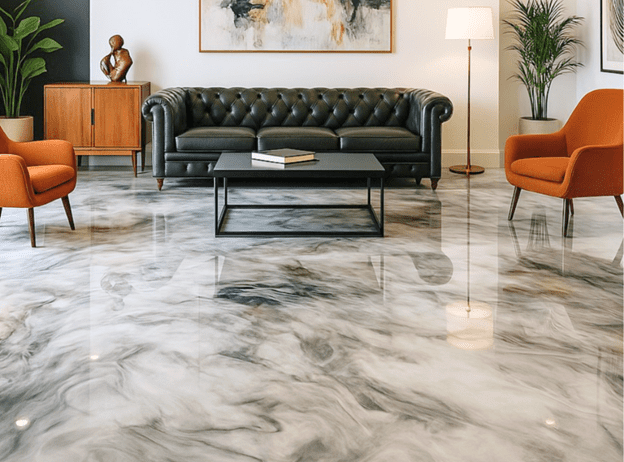
- Living areas – Modern polished look with decorative flakes or metallic finishes
At Clever Coatings USA, we regularly install the coatings not only in homes but also in commercial facilities like retail spaces, restaurants, warehouses, and industrial buildings across Orlando and Central Florida. The same technology that handles heavy commercial traffic can work beautifully in residential environments.
Why Florida Homes Are Choosing Residential Epoxy Floors
Florida homeowners often choose residential epoxy floors because the coating forms a seamless barrier over concrete. Unlike tile or wood, there are no joints where moisture can seep in. When professionally installed with a moisture-tolerant primer and protective topcoat, epoxy performs well in Florida’s humid climate.
Humidity is one of the biggest factors we consider when installing any residential epoxy floor in Florida.
So how does that affect installation?
Concrete in Florida homes tends to retain moisture longer than in drier climates. That means preparation is critical. We always test the slab, mechanically grind the surface, and use moisture-tolerant primers when needed.
Without those steps, coatings can fail. With them, epoxy floors in residential installations can last many years with minimal maintenance.
A Practical Benefit Many Homeowners Do Not Expect
Cleaning is becoming more dramatically easier.
Instead of scrubbing grout lines or worrying about water damage, most residential epoxy flooring systems can be cleaned with:
- A microfiber mop
- Mild detergent
- Occasional rinsing
For families with pets or kids, convenience alone often becomes a deciding factor.
What Are the Pros and Cons of Epoxy Floors Inside the Home?
Every flooring material has trade-offs, and residential epoxy floors are no exception.
From our experience installing coatings across Central Florida, here is the honest breakdown.
Pros of Epoxy Floors Residential Installations
1. Seamless and hygienic
Traditional flooring has seams. Epoxy is not. That makes epoxy floors residential systems easier to keep clean and less likely to trap dust or allergens.
2. High durability
A professionally installed residential epoxy floor resist:
- Scratches
- Chemical spills
- Stains
- Heavy foot traffic
That durability is why similar coatings are used in warehouses and commercial facilities.
3. Moisture resistance
Florida humidity can wreak havoc on wood flooring. Residential epoxy flooring performs well because it seals the concrete surface.
4. Design flexibility
Homeowners can choose:
- Solid color systems
- Decorative flake coatings
- Metallic finishes
- Satin or gloss topcoats
Cons to Consider
Epoxy is not ideal in every situation.
- Installation requires professional surface preparation.
- The coating is applied over concrete, so slab cracks may still reflect if not properly repaired.
- Cure times depend on temperature and humidity.
A question we hear all the time is: “So how long does epoxy actually take to cure in Florida?”
In most cases, interior coatings can handle light foot traffic within 24 hours and full use within several days, depending on the system used.
Is Epoxy Flooring Good for Living Rooms and Kitchens?
Yes, and we are seeing more homeowners choose it for open-concept homes.
Modern residential epoxy flooring systems can look surprisingly refined. Decorative flakes create a stone-like appearance, while metallic finishes mimic polished concrete or marble.
For living spaces, we typically recommend:
- Satin or matte topcoats for reduced glare
- Slip-resistant additives for safety
- Neutral color palettes that complement interior design
Real-World Installation Considerations
After installing many residential epoxy floors across Orlando homes, a few practical details stand out.
Furniture planning matters.
During installation, rooms need to be cleared completely.
Concrete conditions matter even more.
Older slabs sometimes contain previous coatings or sealers that must be removed through mechanical grinding.
Humidity affects cure time.
Florida’s climate means coatings may take slightly longer to fully cure compared to drier states.
These details are why professional installation is so important for any residential epoxy floor project.
Why Central Florida Homeowners Trust Clever Coatings USA
Floor coatings are only as good as the preparation underneath them.
At Clever Coatings USA, our installation process includes:
- Mechanical diamond grinding for proper adhesion
- Crack and surface repairs before coating
- Moisture testing of concrete slabs
- Industrial-grade epoxy and polyaspartic systems
We install coatings across Orlando and Central Florida for:
- Garages
- Patios
- Driveways
- Home interiors
- Home gyms
- Laundry rooms
- Basements
Our team also works with commercial facilities including retail stores, restaurants, warehouses, and industrial buildings.
Each environment requires a different coating system. That is where experience matters.
Conclusion
Interior flooring choices matter more in Florida than many homeowners expect. Heat, humidity, and heavy daily use can quickly wear down traditional materials.
That is why more homeowners are considering an epoxy floor inside house spaces like kitchens, gyms, and living areas. When professionally installed, epoxy creates a seamless, durable surface that stands up to Florida’s climate while offering modern design flexibility.
Ready to upgrade your interior floors? Book a Free Consultation / Get a Free Estimate — our team will walk you through the best options for your space.
FAQs
How much does residential epoxy flooring cost in Florida?
The cost of residential epoxy flooring depends on several factors, including the condition of the concrete, the size of the area, and the coating system used. Decorative flakes or metallic finishes typically cost more than solid color systems. Professional preparation and moisture mitigation can also affect pricing.
How long do residential epoxy floors last inside a home?
Professionally installed residential epoxy floors can last 10–20 years indoors. Longevity depends on surface preparation, coating quality, and maintenance. Interior spaces often experience less wear than garages or commercial areas, which helps extend the lifespan of epoxy floors in residential installations.
Are epoxy floors’ residential surfaces slippery?
A residential epoxy floor can be slippery if installed with a high-gloss finish and no texture. However, professional installers usually add slip-resistant additives to the topcoat. This allows residential epoxy flooring to maintain a smooth appearance while improving traction.
Can epoxy flooring be installed over old concrete?
Yes, but the concrete must be properly prepared. For residential epoxy floors, installers typically grind the slab to remove old sealers, adhesives, or contaminants. Crack repair and moisture testing are also important steps to ensure epoxy floors’ residential coatings bond correctly.
How do you maintain residential epoxy flooring?
Maintenance for residential epoxy flooring is simple. Most homeowners clean their residential epoxy floors using a microfiber mop and mild detergent. Because the surface is seamless, dirt and spills stay on top of the coating rather than soaking into grout lines or porous materials.