Tile floors can look great when they are new—but over time, grout lines stain, tiles crack, and the whole surface starts to feel dated. Many Florida homeowners ask the same question when planning an upgrade: Can you install epoxy over the tile instead of ripping everything out?
The short answer is yes, epoxy floor coating over tile is possible in some situations. But whether it is a smart option depends on preparation, tile condition, and the environment. Florida’s humidity, for example, changes how coatings cure and bonds are compared to drier climates.
In this guide, we will walk through when epoxy works over tile, how professional installation works, and how the cost compares to removing the tile entirely. We will also explain what homeowners in Orlando and Central Florida should expect when considering residential epoxy flooring for garages, patios, home gyms, and more.
Can Epoxy Floor Coating Be Applied Over Tile?
Answer Block
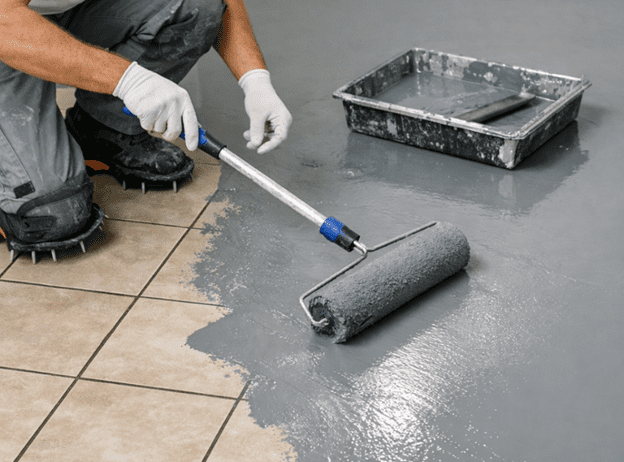
Yes, epoxy coatings can sometimes be applied over tile floors, but only when the surface is structurally sound and properly prepared. The tiles must be securely bonded, thoroughly cleaned, and mechanically profiled so the coating can adhere to. Without proper preparation, the epoxy may fail or delaminate over time.
From our experience installing coatings across Central Florida, tile surfaces require far more preparation than standard epoxy floor coating concrete installations.
Why Tile Is a Challenging Surface
Unlike concrete, tile has several characteristics that complicate coatings:
- Smooth glazed surfaces resist adhesion
- Grout lines create uneven areas
- Tiles can shift or crack over time
If a tile floor has loose sections, moisture issues, or hollow spots underneath, coating it directly is not recommended. Those problems will eventually be telegraphed through the finished floor.
In many cases, homeowners ask us something like: “Can’t you just roll epoxy right over the tile?”
Unfortunately, it is not that simple.
Professional epoxy floor coating installation requires mechanical surface preparation. That usually means grinding the tile and grout to remove glaze and create a profile that allows the coating to bond.
When done properly, the finished surface looks seamless and modern—no grout lines, no cracked tiles, just a continuous floor.
What Preparation Is Needed Before Coating Tile with Epoxy?
Answer Block
Preparing tile for epoxy requires mechanical grinding to remove the glossy surface and create a textured profile. After grinding, installers repair grout joints, fill voids, and apply a bonding primer. Proper preparation ensures the coating adheres correctly and prevents future peeling or delamination.
Surface preparation is the most crucial step in any epoxy floor coating installation—especially when working over tile.
Step 1: Mechanical Surface Grinding
Professionals use diamond grinding equipment to:
- Remove the tile’s glazed finish
- Roughen the surface for adhesion
- Level high grout lines
Grinding also helps identify loose tiles that may need to be repaired before coating.
Step 2: Repairing Grout Lines and Voids
Tile floors contain dozens or hundreds of grout joints. These must be filled and leveled to create a uniform surface before applying residential epoxy flooring systems.
Without filling out grout lines properly, they will show through the finished floor.
Step 3: Priming and Moisture Testing
Florida’s climate matters here.
High humidity can affect cure times and adhesion, particularly when coatings are applied over concrete slabs beneath the tile. During epoxy floor coating concrete projects, we always check moisture levels before installation.
If moisture vapor is present, a specialized primer or moisture barrier may be required.
Is It Cheaper to Epoxy Over Tile or Replace the Floor?
This is one of the most frequent questions homeowners ask. And honestly, the answer depends on the condition of the tile.
In many cases, applying epoxy over tile can reduce demolition costs, but preparation still requires skilled labor and specialized equipment.
Tile Removal vs. Coating Costs
When comparing flooring installation cost options, homeowners typically weigh two paths:
Option 1: Remove tile and coat the concrete
- Tile demolition and disposal
- Concrete grinding and repair
- Full epoxy floor coating concrete system
Option 2: Coat directly over tile
- Surface grinding
- Grout line filling
- Bonding primer
- Full residential epoxy flooring system
Sometimes coating over the tile is cheaper. Sometimes removal produces a better long-term result.
That is why site inspection matters. What looks like solid tile can sometimes hide loose sections underneath.
Where Epoxy Coatings Work Best in Florida Homes
Homeowners often think epoxy is just for garages. That used to be true years ago—but modern coating systems work in many parts of the home.
Across Orlando and Central Florida, we install residential epoxy flooring in spaces like:
- Garages
- Patios and pool decks
- Laundry rooms
- Home gyms
- Basements
- Interior living areas
The seamless surface resists moisture, stains, and heavy wear. In humid climates like Florida, that durability matters.
For example, outdoor patios and garage floors often perform better with polyaspartic systems, which cure faster and handle UV exposure better than traditional epoxy.
Still, both systems start with the same foundation: a properly prepared surface.
What Happens During Professional Epoxy Floor Coating Installation?
Every project is slightly different, but most installations follow a similar process.
Homeowners often ask: “How long will my floor be unusable?”
For a standard residential project, the active installation usually takes one day, though cure times vary depending on the coating system.
Typical Installation Timeline
- Surface inspection and moisture testing
- Grinding and preparation
- Repairs and crack filling
- Primer application
- Base coat and decorative flakes (if used)
- Clear protective topcoat
Florida humidity can extend cure times for traditional epoxy systems. That is one reason polyaspartic coatings are becoming popular—they cure much faster in warm climates.
Commercial properties follow similar steps, though they often use heavier-duty epoxy floor coating concrete systems designed for forklifts, equipment, and constant foot traffic.
We regularly install coatings in:
- Retail stores
- Restaurants
- Warehouses
- Industrial facilities
Each environment requires a different coating system, but the preparation process remains critical.
Should You Install Epoxy Over Tile?
The answer depends on three things:
- Tile condition
- Subfloor stability
- Moisture levels
If the tile is solid and the surface can be properly prepared, coating over it may work well. If the tile is cracked or poorly bonded, removal is often the better long-term solution.
From our experience completing hundreds of epoxy floor coating installation projects across Central Florida, the biggest factor in success is not the coating itself—it is the preparation underneath it.
Conclusion
Installing epoxy floor coating over tile can be a practical way to transform outdated floors without full demolition, but it is not always the right approach. The condition of the tile, proper surface preparation, and Florida’s humidity all play a role in whether the system will perform long-term.
When installed correctly, epoxy and polyaspartic systems create seamless, durable surfaces that work in garages, patios, laundry rooms, home gyms, and even commercial spaces like restaurants and warehouses. The key is evaluating the existing floor before deciding whether to coat over tile or start with bare concrete.
Ready to upgrade your floors? Book a free consultation with Clever Coatings USA or get a free estimate — our team will walk you through the best options for your space.
Book a Free Consultation: https://clevercoatingsusa.com/contact-us/
FAQ Section
Can residential epoxy flooring be installed over cracked tile?
If the tile is cracked but still firmly bonded, installers may be able to repair and level the surface before applying residential epoxy flooring. However, widespread cracking or loose tiles usually means removal is the better option. Structural issues beneath the tile can cause coating failure later.
How long does epoxy floor coating installation usually take?
Most epoxy floor coating installation projects for residential spaces take one to two days, depending on surface preparation and coating type. Florida humidity can affect curing times, which is why some installers recommend polyaspartic systems for faster return to service.
Does epoxy work better on concrete than tile?
Yes. Epoxy floor coating concrete installations provide stronger long-term adhesion because the coating bonds directly to the porous surface. Tile surfaces require grinding, repairs, and primers before coating, which adds complexity to the installation process.
What affects the flooring installation cost for epoxy floors?
The total flooring installation cost depends on several factors: surface preparation, floor size, coating system, and whether existing flooring must be removed. Coating over tile can sometimes reduce demolition costs but may require additional preparation of work.
Is residential epoxy flooring slippery?
Most residential epoxy flooring systems include textured additives or decorative flakes that improve traction. These finishes help prevent slips, making epoxy suitable for garages, patios, laundry rooms, and other areas where moisture may be present.